Showing posts with label information technology. Show all posts

Thursday, 27 December 2018

The imminent and well-deserved demise of Tumblr

Truth Coming Out Of Her Well to Shame Mankind

On 3 December Tumblr announced it was getting rid of adult content, starting in two weeks from the announcement. Tumblr management has never been competent at the best of times, but this takes the cake. This will kill the site.

Those of you who don’t have Tumblr accounts will scarcely imagine what a dumpster-fire this is. Just to start with, the main draw of Tumblr was that it was the one social media site that allowed adult content. What Tumblr has just done is basically what I’ve seen a couple of local hospitality businesses do – a pub on the Otago University campus years ago, and a café in Port Chalmers more recently. Both had quirky art-work that gave them an alternative vibe; both were bought by new owners who removed the quirky art-work and tried to rebrand them as bland mainstream venues; both promptly went out of business. The campus pub was eventually revived by a competent proprietor; the Port café is currently sitting empty, a monument to the folly of erasing a successful enterprise’s main point of distinctiveness. The same fate awaits Tumblr.

I was on Tumblr for nearly two years. My original hope, when I joined, was to spread this blog a little further, since after six years I have exactly two followers here. This was not to be, because Tumblr’s search software passes over posts that contain links to other sites – far from the only way in which Tumblr fails its users – which meant that the links to this blog were only seen by those few of my followers who happened to be online at the moment I posted the links. Additionally, I gained Tumblr followers relatively slowly; I think my peak following, after two years, was 182 including spambots. I think this may have been because I declared on my blog header that I was a nudist but didn’t intend to post any nude photos, which lost me both the people who think nudism is skeevy and the people who want to see nude photos. But I can’t be sure.

(Tumblr advertises itself as being good for artists. How are they any good for artists if they make posts with external links non-searchable, you might wonder, so that artists can either get their art seen or link to places where people can pay them for it, but not both? Well, they aren’t, that’s how. And yet, so many of us put up with them, until now.)

The announcement came in the form of an official letter from the Tumblr staff account, which I would go through and point out all the lies except that it’s all lies. The new guidelines ban, and I quote, “images, videos, or GIFs that show real-life human genitals or female-presenting nipples,” in case you were wondering why the phrase “female-presenting nipples” became a commonly repeated joke in early December. So Tumblr is apparently enlightened enough to talk in terms of gender “presentation”, and yet reactionary enough to frame femaleness as inherently more sexual than maleness. Remember, this is not an old policy. This is a policy devised in 2018 by the curators of one of the internet’s biggest platforms for feminist and LGBT content.

Most of us first knew something was going wrong on 16 November, when the Tumblr app disappeared from Apple’s App Store. For those like me who used Tumblr on our computers rather than on mobile, the first sign was when Tumblr responded by suddenly making huge numbers of posts non-searchable, based on their tags – not just things like #NSFW and #nudity but hundreds more, some quite inexplicable. I never did find out why we suddenly couldn’t search for #chronic pain. Meanwhile, posts tagged with things like #white supremacy and #white genocide continued to pop up in search results.

Our first thought was that this was a ham-fisted attempt to deal with the exponentially-increasing nuisance of pornographic spambots. Any post on any subject at all whose count of responses reached five digits would suddenly start getting reblogged by porn-themed accounts with generic comments like “Cool, see my site here.” You could report and block, report and block, report and block, and new bots would keep on coming. They weren’t intended to attract the eyes of the bloggers they were harassing, but to piggyback off them to hoist their coders’ porn sites up the Google search rankings. You see, the way Tumblr works, if you reblog a post and add a caption, then there is now a link to your blog from every other blog that has also reblogged that post. If thousands of people have reblogged it then that’s thousands of links, all from legitimate content-bearing webpages that real people read, and that’s what Google’s search algorithms look for. So our first response was: well, yay that the staff are doing something about this at last, but they need to get a lot smarter about it, please.

Of course we were quite mistaken to think Tumblr management had suddenly started caring about their users’ experience of the site. The pornbot coders wised up within a week or two and reprogrammed their bots to use the tag #SFW and no unsearchable tags, which it turned out was all it took to get past the algorithms. Those of us who conscientiously tagged Pre-Raphaelite paintings as #nudity (so people could filter them out on their work computer just in case their boss looking over their shoulder got the wrong idea) continued to be punished for our honesty.

The next hypothesis was that it was about the child porn, and that does seem to be what sparked Apple’s ire. Tumblr’s strategy for dealing with paedophiles was exactly the same as their strategy for dealing with Nazis, to wit “have a Block function and let the users do all the work”. I’m glad to say I never saw any myself, but many other users had been making complaints to the staff about the problem for years, with the same results as every other complaint to the staff. Getting dropped from the App Store, now that was something they cared about.

But while the App Store incident undoubtedly fast-tracked the adult content ban, the truth is it had been coming for months. Like many other social media platforms, Tumblr’s business plan is to hire out their users’ eyeballs to advertisers. They evidently noticed that their site was getting popular with the social justice crowd and in particular the Black Lives Matter movement, and they apparently had a big plan in the works to capitalize on that. And many advertisers baulk at the idea of people seeing their ads right next to GIFs of sex acts. So the nudity had to go. We used to think that if Tumblr had just one virtue, it was that they understood that not all nudity is sexual and not everything sexual is degrading; now it turns out they just didn’t care about being degrading until there was money in it.
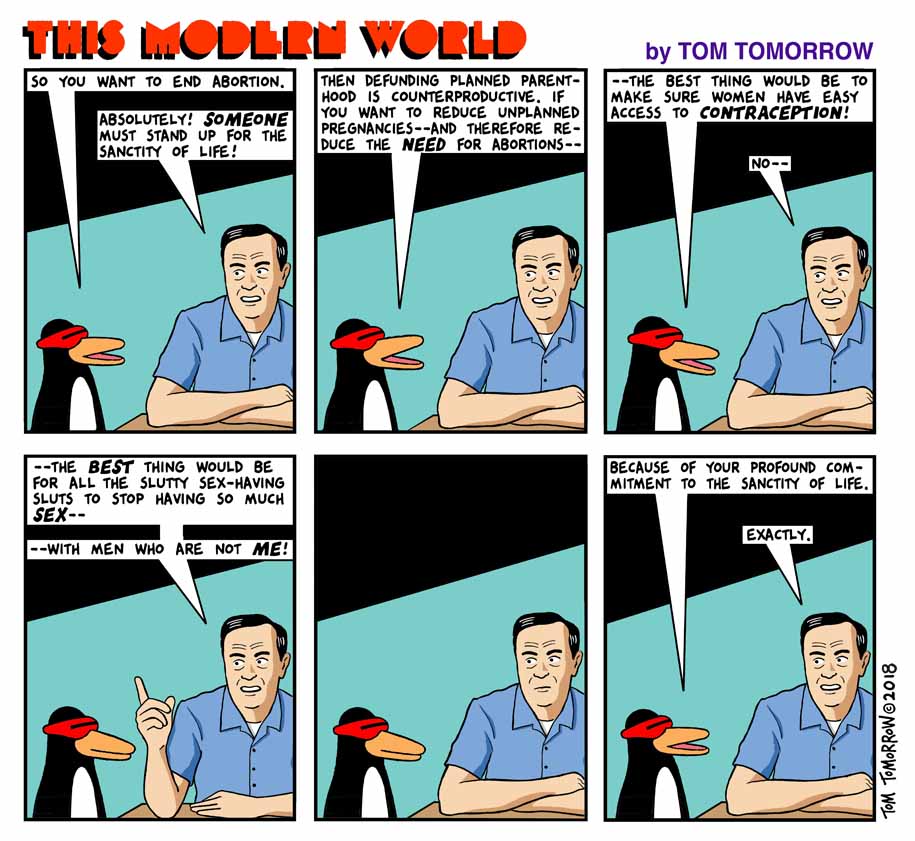
On top of all that, there’s a draconian piece of legislation coming into force in the United States next year called SESTA/FOSTA – I can’t be bothered looking up the acronyms but the ST in both halves stands for “sex trafficking”. Nobody with any human decency could oppose stopping sex trafficking, which makes it the perfect pretext for interest groups pushing less creditable agendas. Under the new law, social media hosts based in the US will be liable for allowing sexual solicitation on their sites, even unknowingly, even if it’s just one ad. This is why Facebook, from next month on, is going to start cracking down on anything that could remotely be interpreted as a sexual invitation, up to and including posts consisting of “looking for a good time tonight ;)”. This legislation will incidentally stifle discussion of sexuality or sexual orientation in social media; I’m pretty sure that’s a plus as far as its originators are concerned, but it might come as an unpleasant surprise for some of its more liberal supporters.

How deleting Facebook posts saying “looking for a good time tonight ;)” will contribute to stopping sex trafficking is: it won’t. But at least Facebook understands that you need human intervention to make this sort of thing work. Tumblr think they’re going to accomplish it with software, and indeed with ludicrously simplistic software. They’ve promised that nude paintings and breastfeeding photos and news articles about nude protests will be safe once they get their programs properly trained, but the algorithm they’re using could not possibly make such fine distinctions even if you trained them on all the data on the internet for a thousand years. You may have seen funny Facebook posts about the photo-captioning AI, trained on pictures of fields of sheep, that tagged all fields as “sheep” and failed to recognise sheep in any other context. It’s the same algorithm.


Nude images follow.

Friday, 19 May 2017

Nudity: ethics and etiquette

In March I went with a local naturist group on an overnight retreat to Quarantine Island, in the middle of Otago Harbour. True to Dunedin’s weather – or maybe my life, I’m not sure – it was cloudy and cold all weekend and it was only comfortable to get naked in the lodge in the evening with the fire going. After we’d come home it was sunny every day for a week, of course.

I am a naturist, or nudist to use the more common word. I have two main reasons for this, both of them about equally important in my own life. One is purely personal. Presumably because I’m on the autistic spectrum, I suffer from a mild hyperaesthesia which makes clothes slightly but permanently uncomfortable. I’m told other people stop feeling their clothes after wearing them for a while; I don’t. Shoes in particular – conditions underfoot have to be very unpleasant indeed before it’s worse than squelching around in my own sweat, so I don’t wear shoes much. But there are no such things as comfortable clothes, not for me.

The other reason is ethical. A human body is a human being and vice versa. Everyone has one; indeed, everyone is one. It isn’t good for people to revile themselves as obscenities, and it’s worse to enforce that revulsion with the power of the state. And it’s dehumanizing to treat another person as an object for the purpose of sexual gratification. Human beings have the moral right to be treated as human beings regardless of what they wear, including if it’s nothing at all – which means not being arrested, fined, locked up, or subjected to any other legal penalty, if they’re not hurting anyone. In short, public nudity morally ought to be both legal and acceptable.

The word “naturism” obviously implies that the value of nudity lies in its naturalness, which is problematic in several different ways. Not all natural things are good, so being natural doesn’t automatically make nudity good. Also, it is arguably natural for humans to adorn themselves, since every culture does it. Naturists shave, style their hair, and wear jewellery, tattoos and piercings just like clothed people. But “naturism” is the name of the movement now, and there’s no point complaining about it. “Nudism” is a broader word; anyone who chooses not to wear clothes can call themselves a “nudist”, whereas to be a “naturist” implies alignment with the naturist ethos. Back in the early 2000s an Altavista search for naturis* would mostly filter out the voyeur sites that nudis* tended to dredge up, and that may have helped the spread of the term. Unfortunately the porn peddlers have gotten wise to this now.

Naturism is one of the more marginalized alternative lifestyles out there. Unlike those “lifestyles” which consist of opting out of various public health measures (like vaccines or water fluoridation), it doesn’t cause actual harm; yet it’s illegal to practise it in public almost everywhere in the world. I suppose we can at least be naturists in our own homes without police harassment, which makes us more fortunate than pot-smokers. On the other hand, there’s less restrictions on sharing pictures of pot-smoking than on sharing pictures of nudity. And ours is surely, bar none, the one lifestyle that is most sexualized by outsiders.

What does “sexualization” mean, and what’s wrong with it? I’m tempted to say “Ask any woman,” and leave it at that. I’ve seen confusion about this in other contexts as well. Does it make sense, for instance, to ask casual bloggers not to “sexualize” particular sexual orientations? Bisexuality is sexual, isn’t it? It’s right there in the name! How can you help “sexualizing” it if it’s already sexual? The answer is that “sexualizing” something doesn’t mean connecting it to sex as a topic; it means making it sexy (or trying to), which is not the same thing at all.

A medical lecture on the physiology of fertilization in humans will discuss sex in some detail, which makes it “sexual” in a reasonable, if technical, sense of the word. But it isn’t remotely sexy – trust me on this. That’s not sexualization. Conversely, I’m sure you’ve seen advertisements that associate all kinds of completely non-sexual things with revealingly-clad yet concealingly-posed women looking suggestively at the camera. I used to regularly walk past a local fish-shop van (I haven’t seen it in a few months now and I’m not inquiring after it) which was adorned with a head-and-shoulders photo of a young woman, apparently topless, caressing a dead fish whilst assuming what was admittedly a more successful attempt at a come-hither expression than I would have been able to muster in her position. That’s sexualization.

Now the foundation of the naturist platform is the proposition that nudity can, and should, be desexualized. I’ve seen a few blogs now – pretty much all on Tumblr, for some reason – claiming that naturist environments feature unrestrained public sex. If you find one of these, you should know it’s lying to you. It’s somebody’s sexual fantasy. There’s nothing wrong with having sexual fantasies, but there’s everything wrong with slandering a worldwide category of people in the course of expressing them. Again, ask any woman.

Monday, 24 October 2016

Oh, the humanities

My employers’ employer, the University of Otago, has decided to cut staff positions in the humanities. Music is going to be hit the worst. As usual, the justification is money. It’s been suggested that maybe the University should ease off on its endless construction drive if it needs to free up some cash. (In twenty years I’ve never known the campus be without a big hole in the ground somewhere. Face it, Otago, the Richardson Building is a plug-ugly wodge of concrete and no amount of landscaping around it is going to change that.)

However, this wouldn’t fix the bigger problem, which is the government’s attitude. Statements from the Ministry make it clear – education is for fitting young people for the workforce; anything else is an indulgence. Here’s the official position in their Tertiary Education Strategy.

Skilled, knowledgeable individuals are essential to the success of businesses and other organizations. Access to skilled workers allows businesses to increase the value of their products and services and to pay higher wages. In turn, people are better off, healthier and happier, and New Zealand is a more attractive place to live and work.
For most young people, achieving a tertiary qualification is a crucial milestone towards a successful working career. Whether they study at a university, polytechnic, wānanga, private training establishment, or through an apprenticeship, a qualification gives them a concrete record of knowledge learned and skills gained that they can use to move up the employment ladder.

And in the Minister of Education’s own words, prefacing that document:

The new Tertiary Education Strategy 2014–19 has been developed to... contribute to the Government’s focus on improving New Zealand’s economic outcomes. The “Building Skilled and Safe Workplaces” programme of the Government’s Business Growth Agenda aims to materially lift New Zealand’s long-run productivity growth rate while maintaining our high rate of labour force participation. This requires tertiary education to better equip individuals with the skills and qualifications needed to participate effectively in the labour market and in an innovative and successful New Zealand.

Sure enough, Priority 1 in the Strategy is “delivering skills for industry”. There is nothing anywhere about developing insight or critical thinking. Public education, to this government, is solely a means of polishing up new cogs to slot into the commercial-industrial machine.

My instinctive response to this is a string of expletives, but that’s not the way to build a counter-argument. If you want rational debate, start by taking your opponent’s concerns seriously. Education costs society money; don’t we then have a responsibility to pay that money back? Granted that some people derive personal value from knowing all about, say, the anti-imperial politics encoded in the Book of Revelation or the practice of cannibalism in indigenous South American funerary rites, shouldn’t they stump up their own cash for it?

Monday, 15 August 2016

How to pour money down the drain

Ever commit yourself to something and then regret it? I’m starting to feel that way about this blog post. I realized something, you see, for whatever that’s worth, and I thought I might share it. But in order to explain it I first have to go over basic economic theory. Only, some people who are close to me in their politics have a very different economic theory, which doesn’t yield the same insight. So I have to start by explaining the two theories and why I think the first one has more explanatory power, and then I have to show that, although politics like ours traditionally uses the second theory, it doesn’t need it. I would rather just skip ahead and tell you my idea, but it doesn’t make sense if you haven’t sat through a few economics lectures. So here goes.

Where does profit come from? Capitalist economists explain with the trade theory. Suppose your old car is getting elderly and taking up space in your garage. You reckon that if someone nicked it you’d only be down $2500 all told. At the same time, I need a car for my work, doesn’t have to be flash or new, but I figure even an old banger will easily net me $4000 with the use I can make of it. So I offer you $3000, which is $1000 less than what I’m expecting to gain. You take it, because that’s $500 more than the car is now worth to you. This is what’s called a “positive-sum interaction”. You gain $500 in cash, and I gain $1000 worth of car. A total of $1500 has appeared out of nowhere. This $1500 is “surplus value”.

Economists apply this theory to all kinds of transactions, including labouring for a wage. The labourer is the seller and the employer is the buyer, and obviously the wage must be worth more to the worker than their time or they’d quit, while the labour done in that time must be worth more to the employer or they’d lay the worker off. Karl Marx disagreed. Goods don’t appear out of nowhere. Goods are made from raw materials when labourers put labour into them. Therefore, the labour is the source of the surplus value (measured as the price of the product minus the cost of the materials), and the labourer is the rightful owner of that value. According to the labour theory, an employer who then takes away the goods, sells them, pockets the profit, and doles out a fraction of it back to the worker, is nothing but a thief.

Which theory works? Another parable. Mr Miggs runs a back-shed factory making plastic coat-hooks that you can stick on a door. He sells them at $5 for a packet of three, but his cost to make those three, including labour, is only 50c. According to the labour theory, he’s robbing his staff of $4.50 per unit. But one day Mr Miggs buys a 3D printer, an automatic packet-sealing machine, and some drones to carry things around the factory. He sets up an automatic e-mail system to alert his courier when there’s a shipment ready. In short, Mr Miggs automates his process totally, and lays off all his employees. He can now make his coat-hooks at a cost of 10c per unit. He drops his price from $5 to $4.80, which raises his sales by 2%. Not only is he selling more units, but his profit per unit has gone up from $4.50 to $4.70. The trade theory easily accommodates this scenario; the labour theory boggles. Whose labour is Mr Miggs exploiting? Where is that $4.70 coming from?

Score one for the trade theory. But I would have to query whether Mr Miggs’ staff, back when he was employing staff, were genuinely free agents. When your only choice is between two bad alternatives (such as: break your back working for peanuts, or watch your children starve), then technically you could count as a gain the advantage that the lesser evil holds over the greater, but that seems awfully sophistical. If someone mugs you for your wallet, they get your money and you get to stay alive – it’s a win-win! The higher the stakes are for you, the smaller your bargaining power. The outcome might well be positive-sum, but if you can’t realistically negotiate your share of the benefits, they’ll be massively skewed in the other party’s favour. That sounds like exploitation to me.

Actually, “the higher the stakes” is not a good way of putting it. A speculator might lose millions in a day in a derivatives clearinghouse, whereas a drain-layer begging for a raise is only dropping a few hundred a week if their employer decides to fire them instead. That doesn’t mean the speculator is in direr straits. What constrains your bargaining power is how much you’ll be left with if things go sour. Back when I was taking my first semester of economics lectures, I wrote a post about what I saw as the major problems with economic theory as it is taught to university students. If I were writing it now I might moderate my tone in places, but I would not make any substantive changes. And the main point of that post is the proportionality issue I’m talking about here: some people can better afford to lose millions than others can afford to lose hundreds.

Now my realization is about the destruction of value, which the labour theory also doesn’t account for. If value can come out of thin air, it can also vanish into thin air. A simple example might be if you were competing with yourself. If that sounds like nonsense, think of professional sports. Their revenue comes from two sources: stadium seats and television ratings. These two are in direct competition with each other. The more people watch from the sofa, the emptier the stands are. Some portion, at least, of the advertising for either one shifts revenue around instead of increasing it. The money spent on that portion of advertising might as well be dumped into a shredder.

Friday, 27 March 2015

On hipster beards and gender essentialism

The background: someone posted this Herald article, entitled “Hipster beards are just a way to get women – study”, on a feminist Facebook group that I follow. The first comment on it read “I would love to know what Daniel Copeland thinks of this.” I started to answer, and then found it was getting long enough to be a blog post, and hey, I haven’t got a blog post yet this week, so...

Well, since I’ve been asked for my opinion – the first thing I notice is the title. I used to work at a magazine, and I know what editors do to titles. “This will get people to click the link” always trumps “This actually has something to do with the content” (let alone “This summarizes the content non-misleadingly”, which seldom gets a look-in).

So it’s an evolutionary psychology study. There’s a solid core of good theory under evo psych, but there’s also a lot of poorly-evidenced studies around, especially in areas relating to gender. (Evo psych examines a much broader range of topics than just gender, but you’d never know it from the media coverage.) The science reporting in this instance is so bad that I can’t tell for sure whether this study is one of the good ones or one of the bad ones; my money’s on the latter. See, evo psych has a communication problem (quite apart from the number of poorly-evidenced studies it seems to generate). Actually, most biological sciences run into this problem at some point, but they’re particularly egregious in evo psych.

Tuesday, 17 December 2013

Imponderable III: The Self

I was a curious kid. I wouldn’t have been more than eight years old when I learned that green things are green because they absorb the light that isn’t green. Not that I’m claiming I understood it fully. For some time I was mystified as to why green cellophane didn’t make things look red when you looked through it, because I thought absorption was basically light going into the object while reflection was basically light bouncing off the object, so that light going through the object was more like absorption than reflection, because it didn’t bounce off, so if green objects absorbed red light then how come...?
In case you are puzzled by this yourself, absorption isn’t about light “going in”, it’s about light going in and stopping (because its energy has been captured and redirected elsewhere, always at least partly into raising the object’s temperature). The primary distinction is between light that stops and light that keeps going; the latter category is secondarily divided into light that passes through and light that bounces off.
However, at least some of my high-school chemistry classmates had evidently missed this information, because when our teacher explained how the red dyes in a plastic ANZAC Day poppy absorbed shorter wavelengths because the electrons in the iron atoms jumped up a couple of valence shells, or something, one of them exclaimed “So it’s not really red? It’s just that it absorbs the other light?”
This isn’t the Imponderable on consciousness, that’s still to come, so I won’t here speculate on why our experience of colour feels so removed from the Newtonian interpretation of light wavelength and frequency. The point here is this idea that photon absorption is somehow cheating – that there must be a “real red” somewhere which isn’t faked up out of all that physics-y stuff. Because people who have got past that, and are perhaps even now chortling at my sixteen-year-old classmate, are still susceptible to the idea that there might be “real” fear, “real” anger, or “real” love floating around in amongst their synapses and neurotransmitters.

Thursday, 7 November 2013

This is how I write when I have a word limit

Earlier this year the Labour History Project held a competition calling for essays on people’s vision for New Zealand. I entered this, but – as you can tell from the fact that I’m blogging it – I didn’t win. My title was “We Can Do Better”, because I’d spent all the time available on the essay itself and had to come up with something vaguely snappy-ish at the last minute. Because it was written for an audience of politically conscious New Zealanders, I mention quite a few things in passing which I would have had to sit down and explain for an international audience. I’ve put in links that hopefully should be helpful there. I wrote this all before the recent revelations about the Auckland rape gang and the beyond-incompetent police response to it, or that would have been the major focus of the essay.
Yes, this is how I write when there’s a word limit. When I worked at a local student magazine my style was described as “brisk”. I guess it makes for quicker reading but I hate not being able to explain all the nuances.


We humans are very good at coming up with solutions to our problems. Unfortunately, the solutions tend to create more problems. Plumbing means cleaner cities but dirtier oceans. Literacy means less ignorance but more squinting. The best we can hope for is that the new problems are smaller than the old ones. Then we can solve those ones, and so on.
So if you want to know what the future looks like, don’t look at the people celebrating existing ideas. Look at the naysayers, the people picking holes in them. Look at the Earth Hour people, not the “Human Achievement Hour” people. They’re where the next wave of improvements will come from.
That’s why I don’t take a Utopian approach to politics – any more than to housework. I’m never going to make the house perfectly clean, and it wouldn’t last long if I did. Instead my philosophy is what’s called meliorist, from the Latin for “better”. You see something that needs fixed, you fix it. You see something that needs cleaned up, you clean it up. You make things better than they were before.