Showing posts with label disability. Show all posts

Sunday, 3 November 2019

Why you’re wrong about “Joker”

Joaquin Phoenix as Arthur Fleck in Joker

Crossposted from Dreamwidth

  • Joker is not a comic book movie, at least in the sense of giving you anything you would remotely expect from a comic book movie. It has some character names and place names the same as in the comics, and near the end there’s a scene which will be instantly familiar to anyone who knows anything about Batman, but there are no superpowers, no costumes, no heroes, no fantasy or science fiction elements at all. People who enjoy comic book movies but not bleak gritty character dramas won’t like it. People who enjoy bleak gritty character dramas but not comic book movies will find nothing objectionable in it.

    (Mild spoiler warning, by the way. I don’t get into specifics but you may find the edge of surprise dulled on some elements of the movie if you read this post before you see it.)

Wednesday, 13 February 2019

Did I always know I was bisexual?

I am bisexual
Reposted from my Dreamwidth blog

How long have I known I’m bisexual? A simple question with no simple answer. Someone passed a meme around on Facebook last week saying “It’s fine if you haven’t always known,” which prompted me to reflect.

I have accepted it for seven or eight years, I suppose. But was it a matter of learning something about myself I didn’t previously know? Or was it just that I started to be honest with myself about something I’d always known? Neither of those sits quite right with my memory.

I didn’t come out to anyone but my partner for several years after this realization. Even now, although I openly identify as bisexual online, you wouldn’t guess it from my life in physical space. Primarily, of course, my partner and I were and are in an exclusive relationship and already had been for years before, so I’m not seeking romantic or sexual partners of any gender and have no intention of doing so.

(This is something people sometimes misunderstand, so in case this concept is new to you: no, that doesn’t mean I’m not really bisexual or that I’ve “chosen a side”. I’ve chosen a person.)

But it took years for me to summon up the courage to come out at all, even online. I’ve never taken part in any Pride event, publicly or otherwise, nor any other LGBT-related social activity. Last year a friend invited me to a “coming out stories” session as part of a campus LGBT awareness week; I chickened out.

I grew up Evangelical, which in New Zealand isn’t quite as tightly bound to conservative politics as it is in the US, but on some issues there is definitely a Godly side and a Satanic side, and at least back in the ’80s and ’90s sexual orientation was one of those issues. Meanwhile in the secular culture which I encountered at school, to be gay was the very depth of loserdom, the nadir towards which lesser losers such as geeks and nerds and the arty-farty were presumed to be drawn.

Once I entered an environment where I had to justify moral positions with reasoning, I quickly accepted (intellectually) that there was no justification for opposing same-sex relationships. With a personal history shaped by Evangelicalism and Kiwi-bloke toxic masculinity, however, my emotional reactions took over a decade to catch up – and indeed, acknowledging my own bisexuality was a late stage in that very process.

Nowadays my only contact with the Evangelical community is through my family and some old friends, and if they’re any indication then the norm seems to be shifting. But that’s only a few people, and those few might just as easily be drifting away from the norm as drifting along with it.

Anyway, my single biggest reason for delaying coming out publicly was that I felt a bit presumptuous suddenly identifying as a member of a community which I knew very little about and had a history of being uncomfortable with.

There existed in my teenage years a movement which called itself “Gay” and “Queer” – yes, “Queer” – with its own symbols and aesthetics and its proprietary words, including “bisexual”. This movement seemed entirely alien to everything that was familiar to me, and of course both sides of my cultural background actively encouraged that alienation. I didn’t see any connection between the rainbow flags and the pink triangles and the fishnets and sequins, on the one hand, and my own developing sexuality on the other.

Saturday, 12 January 2019

Why nudity is worth defending

Riders in the 2009 World Naked Bike Ride pause in front of the White House

Nudity ought to be legal and accepted everywhere it is physically safe. The fact that it is not is a societal injustice. I know most of you aren’t going to agree straight off the bat, so let me lay out my reasoning and see what you think.

Admittedly, it’s not a major societal injustice. There are other injustices with more dire consequences for more people, that more deeply undermine our ability to trust each other and are more urgent priorities. Relatively few people share my autistic sensory aversions to clothing, and those aversions don’t usually rise above the level of mild discomfort unless it gets very hot or the clothing in question is wet. (Swimming-togs feel like knives cutting me.) But most of the time, I think, struggles against different injustices help rather than hinder one another. Raising people’s awareness of one injustice makes them more alert to other injustices, not less. It isn’t a competition.

First point: People deserve a degree of respect simply on account of being people. That includes being able to go about one’s daily business without harassment from one’s fellow citizens. There is no amount of clothing one might wear or not wear that would make one deserve to be yelled at, ogled, pelted with rubbish, or chased off the streets. It is therefore unfair to yell at someone, ogle them, throw things at them, or chase them away because of what they might choose to wear or not to wear.

Second point: Injustice is fundamentally the same thing as unfairness. We just tend to reserve the weightier word for when there are graver consequences, such as when discrimination is enforced by the police or when it prevents people from participating fully in society. Therefore, if people are threatened with arrest or prevented from participating in society due to what they are wearing or not wearing, that is an injustice. If the law allows or prescribes for it, the law is unjust.

Third point: People are in fact harassed, arrested, and ejected from public places if they go nude. We’ve just agreed that this would be an injustice if it happened; well, it does happen, and therefore it is an injustice.

Finally, this particular injustice is enforced by society as a whole, not just by officers of the law. That makes it a societal injustice. The fact that nudity is not legal or acceptable is a societal injustice. There you go.

Somehow this is easier to see when the body taboo in question is that of a culture that isn’t our own – when it’s Arab police forcing women into hijab or French police forcing them out of it, Victorian missionaries imposing Western clothing on Pacific Islanders or that one group of Pacific Islanders (the Kwaio on Malaita in the Solomons) who impose toplessness on Western visitors. But an injustice is an injustice, and it is in the nature of societal injustices that they feel like ordinary common sense to enculturated members of the societies that enforce them. Which would include ours. Which means that just because wearing clothes feels like ordinary common sense to us, doesn’t mean that it’s not a societal injustice.


Now, how serious an injustice is it? Is anyone seriously hurt by having to wear clothes (obviously not counting us autistics and our autistic sensory issues which make us, as we are reminded daily, such a nuisance to normal people)? Well, there are a couple of problems that I think are bound up with it.

Wednesday, 21 March 2018

What economic and government systems do you think function best?

Last week one of my Tumblr followers asked me the above question. I wrote down as many things as I could think of in the time I had, which wasn’t everything. I started putting down justifying arguments for each point, but found that this was making it far too long for a Tumblr post. So I’m repeating my answer here, with a few more points and some argumentation to back it up and hopefully a bit more coherence (but you be the judge of that).

I try to keep my thinking grounded in empirical evidence, but I only have so much time for doing research and what I do find is inevitably biased by being filtered through my own perspective, which is not neutral but was formed through many years of political involvement. I began my political life in 1996, at the age of 18, in a protest against Otago University raising tuition fees. It was a big protest, because at that point New Zealand tertiary institutions had only been charging tuition for a few years and it had caught a lot of people by surprise. So there were a lot of dedicated protesters involved. Many of them were Marxists, so I started off as a kind of Marxist camp follower leaning towards anarchism of sorts. I still feel loyalty to this crowd, and there are some social values that I still think Marxism captures better than most other politics. But looking at the empirical evidence I am unable to endorse the prototypical Marxist plan for achieving those values.

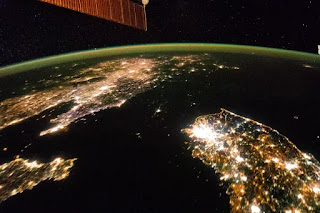
In particular, countries that remodel themselves from the ground up with armed Marxist revolutions always end up as repressive, poverty-stricken dictatorships. I know of no exceptions. Some are worse than others – if I had to choose, I’d much rather live under Fidel Castro or Muammar Gaddafi than Pol Pot – but none of them have ever produced the communist paradise, or even the socialist interim state, that Marx envisioned. In a few places in the world you can see a Marxist regime and a liberal regime side by side, with the same geopolitical and environmental conditions, and compare their socioeconomic outcomes; the liberals (West Germany, South Korea, Botswana) always do better than the Marxists (East Germany, North Korea, Zimbabwe). And really, Marx should have known better, given that the prime real-life event he used to exemplify his theories was the French Revolution, which had exactly the same effect in installing the Napoleonic Empire.

The Koreas from space at night

Empirically, the systems which function best, in the sense of facilitating human life, health, knowledge, freedom, prosperity, and equality, are those known as “mixed economies”, like those of Scandinavia and Japan and formerly New Zealand. These combine open but well-regulated markets with stable democratic government, progressive tax systems, state-owned infrastructure, and high public expenditure on social welfare, health, and education. But of course there are still a great many areas in which I believe progress could be made. And here they are.

Monday, 26 February 2018

Is the writing on the wall?

At the top of this page, for the last five years, my blog header has announced that my job is to take notes in lectures at the University of Otago on behalf of students with disabilities. This is still the case this year – but it may not be next year. I love this job and I want to come back to it as long as I can, but I’m not sure there will be anything to come back to. I think the University (not the Disabilities Office but someone higher up) is trying to stealthily disestablish my position.

In mid-2012 when I started working here, I was given nine lectures a week – nearly twenty hours of work, since I have to edit the notes after I’ve taken them. Then from 2013 to 2015 it was more like fifteen or sixteen classes, dominated by dentistry, over thirty hours. Not quite full-time, but enough to save money for a holiday in Japan. In 2016 the hours dropped off a bit and I started an expensive course of dental treatment and my savings carried me, narrowly, through the summer. But then last year the bottom fell out of the student enrolment for the service I provide. From fourteen or so note-takers the Disabilities Office went down to two, of which I was fortunate to be one. Most concerningly, every one of the students enrolling had been enrolled in previous years; not a single one was new to the service. This year I’m back down to nine classes and, once again, all the student names are ones I’ve seen before. Sorry, let me rephrase that. Once again, both the student names are ones I’ve seen before. I gather I’ll have a few extra classes from a couple of additional students, but not every week. Something has gone wrong.

Apparently, according to my supervisor, the University’s official position is now that we shouldn’t be providing notes for people who don’t absolutely need them, because no-one’s going to be taking notes for them out in the real world and they need to practise doing it for themselves. I’m still not sure how that translates to absolutely nobody new signing up for note-taking; I suspect, but don’t know how I could find out for certain, that the University has stopped mentioning the service in their marketing or at Orientation or wherever my clients used to hear about it before. That means that when my current students graduate and leave, I – like a couple of hundred other Otago service staff members so far – will be out of a job.

(The other option, as I’ve been reminded since I first wrote this post, is peer note-taking, which is when the University pays another student in the disabled student’s class a lot less than they pay me to hand in a copy of their own notes. This has helped me out on occasions when I’ve fallen ill and not had time to arrange a swap with another professional note-taker. But it’s not going to be the same quality as what I do, because they don’t have the training I’ve had, they mostly don’t have my typing speed, they won’t have developed a good system of digital shorthand like I have, and being busy students they don’t have the time I do to devote to editing. Also, I’m told – I can’t substantiate this – if the disabled student and the student note-taker don’t get on, it’s not unheard-of for the note-taker to do bad notes on purpose to hand in while keeping the more accurate version to themselves. Hiring professionals does make a big difference. Switching to purely peer note-taking would still constitute a huge downgrade to the service the University offers.)

I know, I know, mine is not a neutral viewpoint. As both an employee whose livelihood depends on this service and a disabled person myself, I am obviously not going to feel very good about this. But frankly, the University’s reasoning is bullshit. It’s the same tired justification that’s always trotted out for denying accommodations to disabled people: “Take away the crutches and they’ll learn to pull themselves up by the bootstraps.” Well, see, the thing is, those are actually rather apt metaphors, but not the way their users intend. Taking away someone’s crutches and pulling people up by their bootstraps both, if you were to demonstrate them literally, have the same effect: the victim falls flat on their face.

But isn’t one of the goals of education to allow people to integrate freely in society and thus live life to the fullest extent of their capabilities? Absolutely. But taking away accommodations does the opposite of that. It’s true that the world outside the tertiary education sector doesn’t have many note-takers, but I would venture to suggest that that’s because the world outside the tertiary education sector doesn’t have many lectures. Dentists don’t have to type for hours every day, but dental students do. The University’s new policy will mean there’ll be people who couldn’t follow their dream career in dentistry because they couldn’t type; which, given Otago has the only Dental School in the country, is a gross dereliction of duty.

Some disability advocates declare that disability is “socially constructed”. This is neither false nor nonsense, but it’s so misleading as to leave people less enlightened after they’ve heard it than before, unless they’ve taken a cultural anthropology course or similar and learned what this progressive-intellectual shibboleth actually means. It emphatically does not mean that disability is all made up. It emphatically does not mean that people are only disabled because everyone around them treats them like they’re disabled. In fact, it’s pretty much the opposite. Let me explain.

The word “disability” is often used as a synonym for “impairment”, but there’s a subtle distinction which is worth highlighting. Impairments are not socially constructed in any meaningful sense. An impairment is what you physically can’t do with your body that most people can, or can only do with great effort that most people can do easily. (I’m including your brain as part of your body, obviously.) A disability is what obstacles your impairment poses for you as you participate in society – as you work, as you study, as you socialize, as you consume entertainment, and so on. An impairment cannot be removed at will, or it wouldn’t be an impairment. To remove the obstacles to social participation that constitute a disability, society must accommodate impairments. People with impairments are disabled because society doesn’t acknowledge the impairments enough.

An example to make the distinction clear. Short-sightedness, long-sightedness, and astigmatism are all visual impairments. But only very severe forms of these conditions are disabling in our society, because the accommodations for the milder forms – eyeglasses and contact lenses – are accepted without question as normal. If your bank made you take your glasses off “so we can see your face properly” and then made you fill out forms in tiny print without them, then you’d be disabled. If you had to take them off to get your driver’s licence photo and then weren’t allowed to wear them while driving so law enforcement could match you to the photo, then you’d be disabled. If all eyeglass-frames came in one ugly, ill-fitting style, and the people selling them told you you should be grateful to have glasses at all, then you’d be disabled. If strangers and casual acquaintances came up to you in the street suggesting you’d be rid of the need for that contraption on your head if only you would try the new eye-strengthening course they’ve been doing (it’s called Sight Naturally, it’s based on ancient tribal colour lore, you never see the tribespeople in National Geographic wearing glasses, do you?), then you’d be disabled.

There’s a confusion here, by the way, which applies especially to mental and intellectual impairments. Lots of people say they’re in favour of helping people with such conditions. But when they say that, they’re picturing treatments which will wipe away the impairment and turn the patients “normal”. Failing that, they’d rather mentally impaired people disappeared behind institutional doors than be out and about on the street where decent people might bump into them (think of the children!) At a disabilities conference that I, yes, took notes for to earn a bit of extra cash last year, one speaker described dinner party conversations where she would mention that she worked in a mental health facility. “It must be hard keeping them contained. Was the woman who killed herself one of yours? You’d feel sorry for them if they weren’t such a drain on society.” Then she would reveal the truth – that she was paid to test the facilities in the capacity of a client. “Oh, but you don’t seem like you’re about to stab us!” “No, but the night is young.” The goal of mental health treatment, as of all disability accommodations, isn’t to turn the client “normal”. It’s to give them their life back.

From all this it follows that, if you remove a disability accommodation that was previously available, you are creating disability. You are disabling people who happen to have impairments. That stain will be on the University’s hands if my job disappears next year or the year after. I hope their lavish new landscaping project is worth it.

Meanwhile, I have the rather urgent concern of finding an alternative source of income. Because I’m disabled too. I’ve previously mentioned the social anxieties which make applying for work a terrifying ordeal for me. But that terror is upon me. The writing is on the wall.

Friday, 6 October 2017

Mass shootings are not a mental health problem

A few days ago, an old white man fired a lot of guns into a crowd of people at a music festival in Las Vegas. Apparently he also shot at a nearby fuel storage site in a failed attempt to cause an explosion. You can find his name on the news sites; in the distant hope of setting some kind of example with the ultimate goal of cutting off the notoriety that motivates others to emulate these killers, I’m not going to repeat it. He killed 59 people, I think the current count is, and wounded a number estimated at over 500. Some people are calling this the biggest mass shooting in US history, which of course has prompted others to bring up bigger ones, like the Greenwood Massacre of 1921 and the “Battle” of Wounded Knee in 1890. Perhaps they mean the biggest mass shooting by a single shooter.

Last month I said the following about the politics of climate change in the hurricane-torn US, and it goes treble for gun control and mass shootings:

More often, however, “Don’t politicize this problem” means “Your politics offer a better way of fixing it than mine do, and I’d rather people didn’t figure that out.” I can sympathize with a preference for peace over contention, but politics can be operationally defined as the set of problems which are more important than not being contentious.

Gun control laws work. They don’t prevent every single possible shooting, but they cut them down dramatically. Here in New Zealand, we have civilized gun laws. You cannot buy a gun in The Warehouse here like you can in Walmart in the US. You can’t open-carry in New Zealand. Nobody keeps a handgun for “protection” – you don’t need one, because you know other people don’t have them either. The last time anyone shot and killed members of the public here was in 1990, when I was twelve, at Aramoana north of Dunedin. (There have been a handful of incidents since when angry men shot their family members.) In Australia thirty-five people were killed at a place called Port Arthur in 1996, so they tightened up their gun laws and the government bought everybody’s guns off them, and they haven’t had a mass shooting since. You can Google other countries and their gun laws and mass-shooting prevalences for yourself. You’ll find the pattern holds.

Yes, there have been scary incidents in my life when I was exceedingly grateful that the person confronting me wasn’t allowed a gun; and no, they weren’t carrying guns illegally. Turns out our firearms licensing laws actually do make it difficult for dangerous people to get hold of them. So not many people in New Zealand want American-style gun “freedom”. But I’ve met one or two who do, enough to have figured out what’s wrong with their arguments. First up: no, America, you do not have more freedoms or better-functioning democracy as a result of your guns. New Zealand has the same freedom of expression that you do, rather better freedom of religion in practice, a much more representative electoral system, far less gerrymandering, automatic voter registration, and vastly more time to vote when elections roll around. Your idea that your guns keep dictatorship and corruption at bay is a peculiarly American fantasy.

The guy I’m thinking of reckoned the whole problem with American mass shootings was that they let people have guns without taking a mental health exam. He was recommending target-shooting as, he said, a tremendously calming sport. Apparently it’s meditative to squeeze a trigger and see a hole appear in the centre of a target. I told him this wouldn’t work for me because I have terrible, terrible aim. I can’t skip a stone over a lake or win a game of pool against a three-year-old or get past level 1 of a first-person-shooter video game. I didn’t add that I would fail his mental health criterion, that I have exactly the same psychiatric diagnosis as the guy who killed six people in Santa Barbara in 2014 – and also, at his age, the same difficulties with romance and sexuality that he was so enraged about.

Now if you’re wondering, no, I’ve never killed anybody, and no, I don’t think I would have done if only I’d had access to a gun at age 22. Which just goes to show: mental health is not the problem. Though hyperbolic, Michel Foucault’s assertion that mental health diagnoses are primarily a method of social control isn’t completely off the mark. I’ve seen an otherwise pleasant-seeming person try to get library security to eject another library user who was making a bit of noise, not because of the noise primarily but because – in a harsh, horrified whisper – “She’s a handicap!” As a funny-looking person myself (my fashion options are basically “deliberate eccentric” or “aimed at normal and missed”), I occasionally get things thrown at me in the street: usually water-balloons, once an egg, once a lighted cigarette. One acquaintance, when I mentioned this, responded with sympathetic incredulity “I guess some people just have mental problems.” No. This is how people treat people with mental problems. This is the behaviour of a mentally normal human being towards someone they feel entitled to disrespect.

I’d be remiss if I didn’t concede that like most laws, in practice if not on paper, gun restrictions disproportionately target people of colour. That has certainly been the case in New Zealand, from 1869 when selling guns to Māori became a crime to 2007 when armed police stopped traffic and raided people’s homes and arrested seventeen people, most of them Māori, on dodgy charges under the Terrorism Suppression Act. It’ll be the tenth anniversary in about a week, and I don’t think we should let them forget. But to suggest that Americans of colour are better off with their on-paper right to bear arms would be a joke in very poor taste. Ask Tamir Rice or Philando Castile how that worked out for them.

There’s always a lot of discourse about either race or mental illness after mass killings, depending on whether the killer was white. You don’t hear so much about gender, despite the fact that it’s a better predictor of deadly violence than either. I know of only one mass shooting by a woman ever, that being the one that inspired the Boomtown Rats song I Don’t Like Mondays. What does seem to come out repeatedly when people analyse these killers’ backgrounds after the police have shot them dead is anger, hatred, possessiveness, and entitlement, and especially towards women. It’s entirely unsurprising to me that people remember the Las Vegas killer pushing his girlfriend around.

Anger and possessiveness are going to take a lot of time and work to expunge from the culture. In the meantime, the quickest way to make a difference is to prevent these people from getting their hands on the means to kill dozens from a distance. In the longer term I can’t help thinking that the American sanctification of the right to bear arms – that is, the right to have the power to kill – itself encourages the attitude that deadly violence is an appropriate response to perceived social wrongs. Either way, America, you’re never going to fix this problem you have without gun control.

Tuesday, 18 July 2017

Am I a benefit fraudster?

Campaigning is finally getting going in New Zealand in preparation for September’s general election. In the weekend, Metiria Turei, the co-leader of the Green Party and my first choice for Prime Minister, admitted that back in the ’90s she lied to Work & Income New Zealand (WINZ) in order to get enough money to keep her young child fed. The context was that she was announcing a new Green Party policy on the social welfare benefit intended to ensure that no-one has to go through the same thing again.

After five years I am still grateful every day to have a part-time, seasonal job that gives me – most of the time – enough money to save that I don’t have to go back on the benefit. (Living with a partner who bought her house before the pricing bubble is also a critical factor, and I don’t express my gratitude for that often enough either.) I’ve previously been employed as the editor of a very small monthly student magazine which then went out of circulation due to the present Government making student association membership opt-in instead of opt-out in their first term; I loved that job too, but even with full membership the students’ association couldn’t afford to pay me enough to live, and I had to supplement it with the sickness benefit and, for two of those years, the student allowance.

I didn’t start out on the sickness benefit. I borrowed my way through university hoping to become an academic, but I suffered depression and sleep disorders and couldn’t cope with the energy demands of graduate study, so I ended up on the unemployment benefit. Back then, and I think it’s only gotten worse since, that meant you had to apply for two different jobs per day and bring proof of it in to regular meetings with your case-worker. That was how I discovered that I have a social anxiety condition. I physically couldn’t do it. I had to get counselling later for the terror I came to feel just opening the automated e-mails I’d signed up to with lists of job vacancies. Besides, given my life history then, I didn’t believe anyone would ever want me to work for them, only “believe” is far too weak a word. I just wasn’t a person who could persuade someone to employ them, with the same certainty as that I wasn’t a person who could get pregnant and give birth.

That caused a misunderstanding which nearly lost me my benefit, actually. I had a blog back then on LiveJournal which was mostly me saying “Sorry, nothing to blog about today,” but one day I wrote something along the lines of “Oh well, back to pretending to look for work tomorrow,” and was very shortly called in for an urgent meeting with my case-worker. I managed to explain to her what I really meant that time. But the unemployment benefit had a strict time limit, and despite the mandatory “how to get a job” workshops they sent me to, I eventually ran over it. I got called in again and told I was going to lose my dole. I had prepared a bunch of counter-arguments to present, but instead I had a shutdown and couldn’t speak and I think I sat there sort of rocking and crying silently, which was when my case-worker referred me to the sickness benefit instead.

The process of getting the sickness benefit was slightly more complicated, but considerably more pleasant, than getting the unemployment benefit. You needed six-monthly medical certificates, which involved regular doctors’ visits, but doctors unlike WINZ staff are kind to their patients and will generally take your word that you’re not lying about your symptoms. (Some WINZ staff have worse attitudes than others, but all of them work in a system which rewards suspicion and punishes empathy.) You do have to be getting assistance with your condition if assistance is available, and that’s how I ended up getting referred to the graduate clinical psychology student who diagnosed me with Asperger’s syndrome – as it was still called in 2005 – and the succession of students who helped me learn ways to overcome some of the difficulties the condition presents.

Here’s the thing, though. To get the sickness benefit your doctor had to explain on the reapplication form, every six months, how your condition prevented you from working in full-time employment. I would tell them that I still suffered from depression and that I had time management issues. These statements weren’t false, but they also weren’t the real reason why I couldn’t get work. There wasn’t an option on the form for “This person is able to work but their social disabilities and anxieties prevent them from applying for jobs anywhere near as often as they would have to in order to stand a chance of actually landing one.” My depression is mild enough that I can keep it at bay nearly all the time without pharmaceutical assistance, which I know is better fortune than many people enjoy. With counselling I’ve learned to manage time well enough that I actually reliably turn up for the beginnings of lectures, an improvement which would astonish anyone who knew me as a student.

So what do you think? Should I have been kicked off the sickness benefit because the difficulties my condition actually caused fell between the cracks of the official criteria? Does that make me a benefit fraudster? Or is the problem an overly harsh, strict, and dismissive social welfare system? What does that imply for other welfare beneficiaries in New Zealand? We have a growing problem with poverty; what does this experience say about its causes? I think I have a pretty good idea. And I have a pretty good idea who to vote for this September.

Monday, 29 May 2017

Debating bigots: the role of allies

This post was originally published on my Tumblr about a week ago.

I’m autistic. I was diagnosed with Asperger’s syndrome back when it was still called that, in 2005; I was 27.

I like to think I can discuss most topics dispassionately and let my opinions be guided by the facts and reason rather than letting my feelings about it cloud my judgement. But I can’t stay calm when debating with anti-vaxxers. Well, I can as long as the debate stays within the bounds of “Do vaccines cause autism? Do they cause other health problems? Why should the mandate to vaccinate over-ride a parent’s personal choices about their children?”

When it gets into the realms of “Supposing vaccines might cause autism, are the benefits worth the risks?” – that’s my danger zone, because so many anti-vaxxers so quickly start saying things that I can’t help hearing as “I’d rather my child died of measles than ended up like you.” And I can’t debate that calmly. That person just told me I ought to be dead.

So I’ve learned to avoid those debates. But here’s the thing. I know perfectly well that just because I don’t get into those discussions, doesn’t mean they don’t happen. I know that there are people who think a child’s autism is a mitigating factor if that child’s parents murder them. I know there are people who think my neurological condition is a scourge on the Earth and humanity would be better off if people like me were eradicated.

I can’t engage those people in debate. So, allistic allies, I need you to do that for me.

Not necessarily to convince the bigots themselves; it’s extremely rare for someone to change their ethical or political belief for being confronted, no matter how rational the argument. Sometimes they go away and think about it and change their minds later and come back when they’ve figured out a way to save face. But far more importantly, the bigot isn’t the only one listening. I need you to demonstrate to people who haven’t made up their minds on the question, why the bigots are wrong. I need you to keep the bigots from expanding their numbers by converting impressionable outsiders.

I should not have to debate whether I have the right to exist. But because that debate is happening whether I join in or not, I need you, allies, to pitch in and take my side. Please don’t refuse to engage on the basis that there shouldn’t even be an argument. There shouldn’t, but that’s not how you stop bigotry.

Friday, 19 May 2017

Nudity: ethics and etiquette

In March I went with a local naturist group on an overnight retreat to Quarantine Island, in the middle of Otago Harbour. True to Dunedin’s weather – or maybe my life, I’m not sure – it was cloudy and cold all weekend and it was only comfortable to get naked in the lodge in the evening with the fire going. After we’d come home it was sunny every day for a week, of course.

I am a naturist, or nudist to use the more common word. I have two main reasons for this, both of them about equally important in my own life. One is purely personal. Presumably because I’m on the autistic spectrum, I suffer from a mild hyperaesthesia which makes clothes slightly but permanently uncomfortable. I’m told other people stop feeling their clothes after wearing them for a while; I don’t. Shoes in particular – conditions underfoot have to be very unpleasant indeed before it’s worse than squelching around in my own sweat, so I don’t wear shoes much. But there are no such things as comfortable clothes, not for me.

The other reason is ethical. A human body is a human being and vice versa. Everyone has one; indeed, everyone is one. It isn’t good for people to revile themselves as obscenities, and it’s worse to enforce that revulsion with the power of the state. And it’s dehumanizing to treat another person as an object for the purpose of sexual gratification. Human beings have the moral right to be treated as human beings regardless of what they wear, including if it’s nothing at all – which means not being arrested, fined, locked up, or subjected to any other legal penalty, if they’re not hurting anyone. In short, public nudity morally ought to be both legal and acceptable.

The word “naturism” obviously implies that the value of nudity lies in its naturalness, which is problematic in several different ways. Not all natural things are good, so being natural doesn’t automatically make nudity good. Also, it is arguably natural for humans to adorn themselves, since every culture does it. Naturists shave, style their hair, and wear jewellery, tattoos and piercings just like clothed people. But “naturism” is the name of the movement now, and there’s no point complaining about it. “Nudism” is a broader word; anyone who chooses not to wear clothes can call themselves a “nudist”, whereas to be a “naturist” implies alignment with the naturist ethos. Back in the early 2000s an Altavista search for naturis* would mostly filter out the voyeur sites that nudis* tended to dredge up, and that may have helped the spread of the term. Unfortunately the porn peddlers have gotten wise to this now.

Naturism is one of the more marginalized alternative lifestyles out there. Unlike those “lifestyles” which consist of opting out of various public health measures (like vaccines or water fluoridation), it doesn’t cause actual harm; yet it’s illegal to practise it in public almost everywhere in the world. I suppose we can at least be naturists in our own homes without police harassment, which makes us more fortunate than pot-smokers. On the other hand, there’s less restrictions on sharing pictures of pot-smoking than on sharing pictures of nudity. And ours is surely, bar none, the one lifestyle that is most sexualized by outsiders.

What does “sexualization” mean, and what’s wrong with it? I’m tempted to say “Ask any woman,” and leave it at that. I’ve seen confusion about this in other contexts as well. Does it make sense, for instance, to ask casual bloggers not to “sexualize” particular sexual orientations? Bisexuality is sexual, isn’t it? It’s right there in the name! How can you help “sexualizing” it if it’s already sexual? The answer is that “sexualizing” something doesn’t mean connecting it to sex as a topic; it means making it sexy (or trying to), which is not the same thing at all.

A medical lecture on the physiology of fertilization in humans will discuss sex in some detail, which makes it “sexual” in a reasonable, if technical, sense of the word. But it isn’t remotely sexy – trust me on this. That’s not sexualization. Conversely, I’m sure you’ve seen advertisements that associate all kinds of completely non-sexual things with revealingly-clad yet concealingly-posed women looking suggestively at the camera. I used to regularly walk past a local fish-shop van (I haven’t seen it in a few months now and I’m not inquiring after it) which was adorned with a head-and-shoulders photo of a young woman, apparently topless, caressing a dead fish whilst assuming what was admittedly a more successful attempt at a come-hither expression than I would have been able to muster in her position. That’s sexualization.

Now the foundation of the naturist platform is the proposition that nudity can, and should, be desexualized. I’ve seen a few blogs now – pretty much all on Tumblr, for some reason – claiming that naturist environments feature unrestrained public sex. If you find one of these, you should know it’s lying to you. It’s somebody’s sexual fantasy. There’s nothing wrong with having sexual fantasies, but there’s everything wrong with slandering a worldwide category of people in the course of expressing them. Again, ask any woman.

Wednesday, 16 December 2015

Why eugenics wouldn’t work

Further to my previous post, my friend Wolfboy wrote this in the comments:

I also detect a leftover whiff of eugenics in this line of thought – the idea that people who are “bad” represent a taint we need to clear from the gene pool. That seems to be in conflict with modern understanding of how genes work. I may be wrong here, but my understanding was that modern research showed that genes get turned on and off by environmental stimuli. If that’s the case then any genetic predisposition to be an awful person is better handled by stopping it from being triggered (by looking after people better in general) than by trying to breed it out.

Eugenics. That is presumably why the original inquiry was about the prevalence of sterilize-bad-parents views specifically “in the atheist / rationalist community”. Eugenics, the idea of breeding humans for qualities like intelligence or athletic performance, was proposed by Francis Galton as a practical application of the theories of his cousin Charles Darwin. Darwin himself went along with the idea, although never enthusiastically, and with reservations about the social justice implications. The support it enjoyed for the next seventy-odd years came from places all along the left-right political spectrum, but almost entirely from the atheist-materialist side of the religious divide. That is quite possibly the basis for the (otherwise absurd) notion that the Nazis were a scientific and rationalistic bunch.

The Nazis showed the world what it would take to actually implement a eugenics programme, and since then the idea has been anathema among people of conscience. And rightly so, but when a problematic idea or practice becomes unthinkable within a culture, it doesn’t get cut out cleanly. “Not only will we not do this any more,” people decide, “we won’t even go near it.” The classic example (see Steven Pinker’s The Better Angels of Our Nature, and yes, I know I cite that book a lot) is the odd little superstitions that have grown up around knives in European culture, such as not eating with them. Europeans used to use big sharp knives for all sorts of things, notably settling arguments. In Māori culture there are several prohibitions, like “never sit on a table”, which put together underline the point that people are not food. And in modern political discourse, ever since World War II people have been unduly chary of applying genetic science to Homo sapiens.

Sunday, 20 September 2015

Identity politics and its limits

First up, sorry it’s been so long between blog posts. What happens sometimes is I get a post past the planning stage and I think, OK, I’m nearly done, I’ll have it finished tomorrow. Only the next day it’s not done, but it’s so close to done that I know I’ll have it finished the day after that, no big drama, no need to find something else to post about while I’m working on it. Sometimes, and this was one of those times, this can go on for weeks. And then just as I was finishing I came down with an unusually virulent upper respiratory tract infection, which kept me at home, away from the internet, for nearly a week. Content note: I discuss racism, homophobia, and ableism below, including repeating some slurs.

If you ever need confirmation that there’s more to politics than Left versus Right, utter the word “transphobia” in a reasonably broad left-wing forum and stand back and watch. (I’m not sure what the equivalent would be in a right-wing space; libertarians and conservatives take different views on how many gender identities and sexual orientations are legitimate, but they seem to agree that oppression only counts if it’s the government doing it.) If you do try the experiment, you can probably then count down under your breath how long it takes until somebody starts muttering about “identity politics”.

I don’t know. Maybe this was more of a thing five or six years ago, at least in this country, when the Left was still busy looking for something to blame the Right’s then-recent victory on. One thing a lot of people fixed on was the prominence of queer and feminist interests in the broad Left portfolio, which many claimed was a fatal distraction from the real troubles of the poor and the working class. Because, apparently, only bourgeois women mind being hit on by creepy men, and only the bourgeoisie ever feel attracted to their own gender or identify as a gender that doesn’t match their genital anatomy at birth.

But I think that was one manifestation of a wider political trope that goes: “Social justice struggles A, B, and C were about equal rights for everybody, but social justice struggles X, Y, and Z are about special rights for a bunch of whiners.” Struggles A, B, and C aren’t always in the past tense, at least not among the Left, but that’s the usual pattern. The “special rights” part is where “identity politics” comes into it. The idea is that the social justice movement gives people special rights according to their identity as women, or as people of colour, or as queer people or as trans people or disabled people or whichever one it might be today. And that, say the critics, isn’t justice. Lady Justice wears a blindfold.

Yes, but Lady Justice also carries a pair of scales. If one person misses out on a benefit that others are enjoying, when they’ve made no less effort to deserve it than those others, then that’s unfair. If the benefit is a basic human right, then that’s injustice. And if lots of people are missing out on it because of some aspect of their identity – be it cultural identity, gender identity, sexual identity, whatever – then Lady Justice’s blindfold has slipped. Fixing it will be measured by whether people of that identity are still missing out, and if you didn’t realize they were missing out then fixing it will look like “identity politics” to you.